
Blog posts tagged "Edge Computing"

The heart of open source will be beating in Austin and streamed online for the Open Source Summit North America, taking place on 20-25 June 2022. Open Source Summit is the premier event for open source developers, technologists, and community leaders. It’s a great venue to collaborate, share information, solve problems, and take open sour

With a longstanding commitment to Edge and IoT applications, Canonical has historically placed great emphasis on EgdeX – a set of microservices that enable developers to build apps that run at the edge and act as a middleware connecting the things and the cloud . It’s no surprise that Canonical has also been supporting the
NVIDIA GTC is back again and we’re thrilled to be talking all things Kubernetes with you, on April 12-16! This year too, the conference will be hosted virtually and registration is free, which means even more of us can get together to share knowledge and ideas at the #1 AI conference and workshop! Ubuntu and
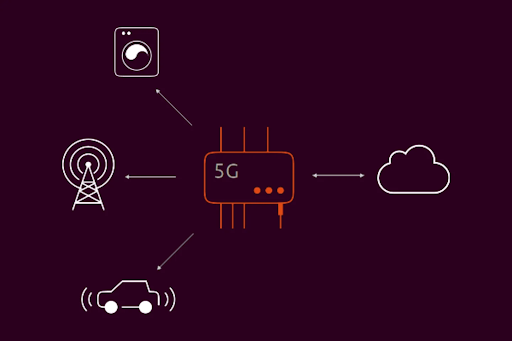
MEC, as ETSI defines it, stands for Multi-access Edge Computing and is sometimes referred to as Mobile edge computing. MEC is a solution that gives content providers and software developers cloud-computing capabilities which are close to the end users. This micro cloud deployed in the edge of mobile operators’ networks has ultra low laten
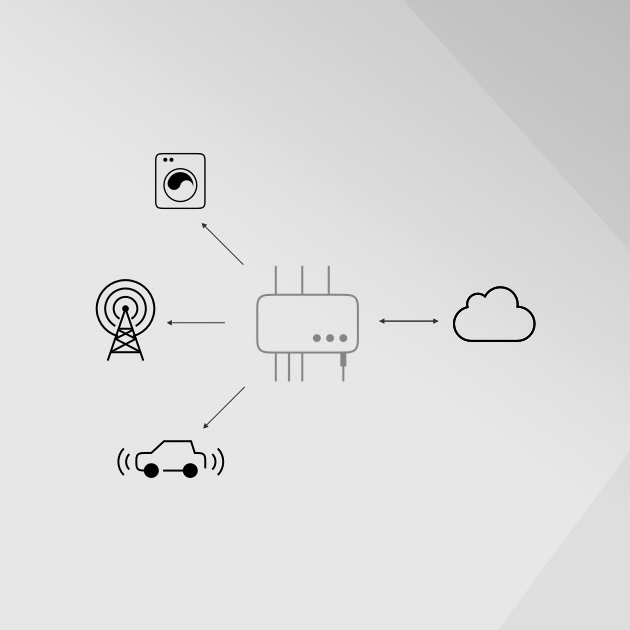
“The King is dead, long live the King.” It might be my french roots speaking, but it seems that actual use cases are replacing King Edge, and it might be for the best. Warning; do not read this blog if you’re particularly sensitive about edge computing (and if you don’t know what this is about,

Kubeflow, the ML toolkit on K8s, now fits on your desktop and edge devices! 🚀 Data science workflows on Kubernetes Kubeflow provides the cloud-native interface between Kubernetes and data science tools: libraries, frameworks, pipelines, and notebooks. > Read more about what is Kubeflow Cloud-native MLOps toolkit gets heavy To make Kubeflo

According to leading independent researchers teknowlogy | PAC, open source platforms – and Kubernetes in particular – are central to the future of digital factories. The PAC RADAR report offers a detailed market analysis of industrial digitalisation trends, and it predicts that Kubernetes-based platforms that bring together edge and clou

15th October 2020: Canonical today announced autonomous high availability (HA) clustering in MicroK8s, the lightweight Kubernetes. Already popular for IoT and developer workstations, MicroK8s now gains resilience for production workloads in cloud and server deployments. High availability is enabled automatically once three or more nodes a

When is Open Infrastructure Summit 2020: October 19th-23rd Where: Everywhere! This year’s OIS is virtual. Get your free ticket Book a meeting This year we’ve probably used the word ‘unprecedented’ almost as often as we’ve said ‘Linux’ and yet life must go on, and certainly so does tech. That’s why we were so thrilled to

Canonical has been working closely with NVIDIA for many years to fuel innovation and support open source software with the power of accelerated processing. That already allowed us to jointly deliver GPU acceleration into Linux, OpenStack and container workloads on traditional datacenter servers. We continued working together, with Ubuntu
Register for the event Who is this event for? After the huge success of its latest virtual event on Kubernetes for the EMEA region, Canonical brings its expertise to the US with another educational discussion. On July 31st, Canonical’s panel of experts come together to share their insights from years of working with developers and

What is Ubuntu Masters? The Ubuntu Masters conference stemmed from a vision to bring the engineering community together to freely exchange innovative ideas, in the spirit of open source. After two hugely successful conferences, connecting IT teams across industries and countries, and featuring speakers from innovators such as Adobe, Netfl
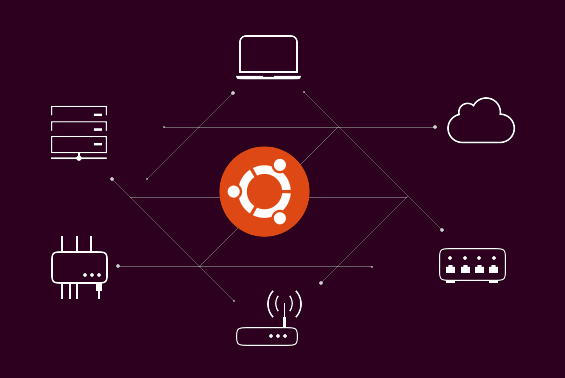
With over 41 billion IoT devices expected to be active by 2027 — that’s at least 5 devices for every person on the planet — edge computing has emerged as a tenable solution to prevent the impending snowballing of network traffic. Allow me to lift the veil on this buzzword and explain why it’s been

Watch on demand With the benefits of Kubernetes now well established in the containerisation space, its adoption continues to exponentially increase. However, as developers and enterprises alike turn to Kubernetes for more and more types of use cases, available Kubernetes solutions often fail to meet their exact needs. Canonical’s extensi
The Ubuntu Masters Conference is a platform for IT practitioners to share how they are solving industry-wide challenges with the global engineering community. These are the real-life use cases they are executing in their professional environments today, giving you actionable ideas to take into your own corporate setting. Join us on Thursd

This is part of a blog series on the impact that 5G and GPUs at the edge will have on the roll out of new AI solutions. You can read the other posts here. Recap In part 1 we talked about the industrial applications and benefits that 5G and fast compute at the edge will